
Walking is one of the simplest, safest, and most effective forms of physical exercise available to people of all ages. Unlike complicated gym workout programs or expensive fitness memberships, walking requires no specialized equipment and can be performed almost anywhere at any time. Despite its fundamental simplicity, walking offers deep physical and mental health benefits that can significantly improve your daily quality of life.
Many people underestimate the transformative power of a simple daily walk. However, modern medical research consistently shows that walking for just 30 minutes a day can strengthen your heart, tone muscles, support weight management, elevate mood, and substantially reduce the risk of chronic life diseases. Whether your personal goal is to drop excess body fat, increase energy levels, flush out mental stress, or maintain baseline joint wellness, a walking habit is a valuable asset.
The best part is that a walking routine is perfectly suitable for absolute beginners and can effortlessly fit into even the busiest professional schedules. In this complete guide, you will learn the exact health benefits of walking 30 minutes daily, how it structurally affects your body, and practical tips to make walking a lifelong healthy lifestyle habit.
Walking is a natural, low-impact weight-bearing movement that keeps your body active without overstraining your joints.
Walking is an exceptional cardiovascular workout. Moving your legs consistently strengthens the heart muscle, lowers elevated resting blood pressure, increases HDL (good cholesterol), and lowers LDL (bad cholesterol) levels, reducing the long-term risk of strokes.
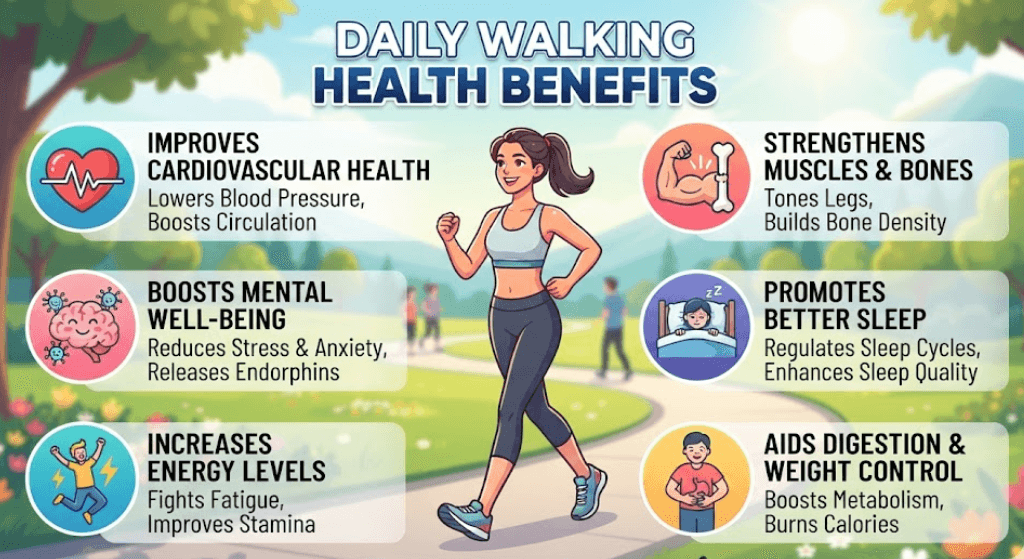
A daily brisk walk burns excess calories and prevents metabolic slowdown. If you are aiming for structural body transformations, combining your walking habit with our Best Diet Plan for Weight Loss will dramatically speed up and secure your long-term results.

Aerobic movement triggers a natural release of endorphins—your brain’s feel-good neurotransmitters. Taking a dedicated walk is one of the quickest ways to break negative thinking patterns. For a comprehensive mental reset, you can check our detailed guide on how to reduce stress quickly and naturally alongside your routine.
Walking forces your muscles to absorb glucose directly from your bloodstream for energy, which naturally increases insulin sensitivity. Going for a short walk immediately after large carbohydrate meals is highly effective for preventing blood sugar spikes.
When you feel fatigued, a walk is often more effective than a cup of coffee. It increases the circulation of oxygen and nutrients to your tissues, leaving you feeling naturally refreshed and alert.

Walking engages your calves, hamstrings, glutes, and core. This constant engagement builds endurance, reduces lower back stiffness, and lubricates the cartilage in your knees and hips, preventing early arthritis.
Physical movement stimulates the natural muscles of your gastrointestinal tract, which shortens the time it takes for food to pass through the large intestine, preventing bloating and constipation.
Regular exposure to natural light during walks regulates your circadian rhythm (internal body clock). People who walk daily fall asleep faster and spend more time in restorative, deep sleep cycles.

As a weight-bearing exercise, walking stresses your bones in a healthy way, signaling cells to build higher bone density. This is crucial for preventing osteoporosis and maintaining structural balance as you age.
Moderate physical exercise speeds up the rotation of white blood cells throughout your body, helping your immune system detect, target, and fight off seasonal viruses and minor bacterial infections much faster.

Walking Pace / Condition | Average Calories Burned in 30 Mins | Primary Fitness Focus |
Casual Stroll (Flat ground) | 90 – 120 Calories | Joint mobility & post-meal digestion |
Brisk Power Walk (Fast pace) | 130 – 175 Calories | Cardiovascular health & fat burning |
Incline Walking (Hills/Treadmill) | 180 – 240 Calories | Lower body muscle building & stamina |
To get the most out of your exercise, consistency is far more important than speed. A great way to build this consistency is by incorporating your walk into a deliberate schedule. Setting up the best morning routine for a health life ensures you get your physical movement out of the way before your day gets busy, giving you steady energy for hours.
Q1: Is walking 30 minutes daily enough to replace the gym?
For overall health maintenance, longevity, and standard cardiovascular fitness, a 30-minute daily walk is more than enough to meet recommended physical activity guidelines.
Q2: Is it better to walk on an empty stomach or after eating?
Both are great. An empty-stomach morning walk can promote faster fat-burning, while a post-meal evening walk is perfect for clearing blood glucose and boosting digestion.
Q3: Can walking reduce deep visceral belly fat?
Yes. Continuous brisk walking burns total body fat, including dangerous deep visceral abdominal fat, over time.
Q4: What should I do if I don’t have 30 continuous minutes?
You can break it down into three smaller 10-minute walks throughout the day (e.g., after breakfast, lunch, and dinner). The metabolic benefits remain excellent.

Embracing the habit of walking 30 minutes daily is one of the easiest yet most rewarding decisions you can make for your health. It requires no complex training or heavy investments, yet its impact on your heart, weight, mood, and sleep is profound. By stepping outside consistently, wearing comfortable shoes, and staying properly hydrated, you lay down a permanent foundation for a long, vibrant, and disease-free life. Put on your sneakers, take that first step, and let consistency guide your path to wellness.
The information provided in this article is for educational and informational purposes only and should not be considered as professional medical advice. Always consult with a qualified doctor or healthcare professional before initiating any new physical exercise routine, especially if you have pre-existing joint issues, heart conditions, or other medical concerns.