Introduction
Water is one of the most essential elements for human survival and overall health. Every organ in the body depends on water to function properly, from the brain and heart to the digestive system and skin. Despite its importance, many people still do not drink enough water every day. Dehydration can lead to fatigue, headaches, poor concentration, digestive issues, and even serious health complications if ignored for a long time.
The amount of water a person needs can vary depending on age, body weight, activity level, weather conditions, and overall health. Some people believe drinking eight glasses of water daily is enough, while others may require much more. Understanding your body’s hydration needs is important for maintaining energy, supporting metabolism, improving skin health, and helping your body remove waste products naturally through normal body functions.
In this complete guide, you will learn how much water you should drink daily, the benefits of staying hydrated, signs of dehydration, and practical tips to increase your daily water intake for a healthier lifestyle.
Why Water Is Important for the Body
Water plays a major role in almost every body function. Around 60% of the human body is made up of water, which shows how important hydration is for survival and health.
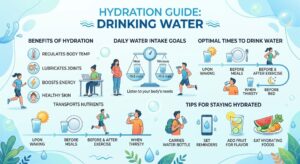
Main Functions of Water:
- Regulates body temperature.
- Helps digestion.
- Carries nutrients and oxygen to cells.
- Removes toxins through urine and sweat.
- Lubricates joints.
- Supports healthy skin.
Without enough water, the body cannot perform these basic functions properly.
How Much Water Should You Drink Daily?
There is no single answer that works for everyone. However, health experts generally recommend a standard average daily fluid intake:
- Men: Around 3.7 liters (15 cups) per day.
- Women: Around 2.7 liters (11 cups) per day.
Note: This total includes water from all beverages as well as the moisture content found in your food.
Factors That Affect Your Water Needs:
- Physical Activity:
People who exercise or perform physical labor lose more water through sweat and need additional hydration.
- Weather Conditions:
Hot weather increases sweating, which means your body requires more water to stay balanced.
- Body Weight:
People with larger body sizes usually need more water compared to smaller individuals.
- Health Conditions:
Health issues like a fever, vomiting, diarrhea, or kidney problems can drastically affect your hydration needs.
- Pregnancy and Breastfeeding: Women require extra fluids during pregnancy and breastfeeding to support proper development and milk production.
Signs of Dehydration
Many people do not realize they are dehydrated until physical symptoms begin to appear.
Common Signs to Watch For:
- Dry mouth.
- Headaches and migraines.
- Dark yellow urine.
- Dizziness or lightheadedness.
- Unexplained tiredness and fatigue.
- Dry skin.
- Sudden muscle cramps.
Ignoring these signs of dehydration for a long time can eventually lead to more severe health issues.
Benefits of Drinking Enough Water
- Boosts Energy Levels:
Proper hydration helps maintain optimal energy levels and significantly reduces daytime fatigue.
- Improves Brain Function:
Drinking water helps improve concentration, memory, focus, and overall mood.
- Supports Digestion:
Water helps break down food efficiently and prevents common issues like constipation.
- Promotes Healthy Skin:
Consistent hydration keeps skin soft, glowing, and looking healthy from the inside out.
- Helps Weight Management:
Drinking water before meals can reduce overeating and help you manage your weight.
- Removes Toxins:
Proper water intake helps your kidneys flush out metabolic waste from your system.
- Prevents Headaches:
Since dehydration is a common trigger for headaches, drinking water can stop them before they start.
Best Times to Drink Water
- Morning: Drinking water right after waking up helps activate the internal organs and gives a clean start to your system. To maximize this, you can learn about the specific benefits of drinking warm water daily to support hydration and digestion.
- Before Meals:Having a glass of water before meals can help control appetite and prevent overeating.
- During Exercise: Hydration is critically important before, during, and after any physical activity or workout.
- Before Bed: Drinking a small amount of water before sleep helps maintain necessary hydration overnight.

Can You Drink Too Much Water?
Yes, excessive water intake can be harmful and may cause a condition called water intoxication (hyponatremia). This happens when drinking too much water dilutes the essential sodium levels in your blood.
Symptoms of Drinking Too Much Water:
- Nausea and vomiting.
- Confusion.
- Throbbing headaches.
- Swelling in the hands, feet, or lips.
Balance is always important. You should drink according to your body’s actual needs and activity levels.
Foods That Help Hydration
You do not have to rely only on plain water to stay hydrated. Many fruits and vegetables contain exceptionally high amounts of water.
Best Hydrating Foods:
- Watermelon
- Cucumber
- Orange
- Strawberry
- Lettuce
- Coconut water
Including these items in your kitchen is an easy way to meet your hydration goals. For a broader look at upgrading your nutrition, explore our guide on the 10 powerful foods that boost immunity naturally.

Tips to Drink More Water Daily
- Carry a Water Bottle:
Keeping a reusable water bottle nearby serves as a constant visual reminder to drink.
- Set Reminders:
Using phone alarms or hydration apps can help you build a consistent drinking habit.
- Add Natural Flavor:
Infuse your water with fresh lemon, mint, or cucumber slices for a better taste.
- Replace Sugary Drinks:
Choose pure water instead of drinking soft drinks, soda, or processed juices.
- Drink Small Amounts Frequently:
Sip water steadily throughout the day rather than waiting until you feel intensely thirsty.
Water and Weight Loss
Water can support a healthy weight loss journey in several natural ways.
How Water Helps:
- Reduces unexpected hunger cravings.
- May slightly support metabolism and healthy weight management.
- Replaces high-calorie beverages.
- Improves overall workout performance.
Drinking water consistently can be a foundational step for long-term health. If you are looking for a structured approach to your meals alongside staying hydrated, check out our recommended Best Diet Plan for Weight Loss.

Water and Skin Health
Proper hydration improves skin appearance, suppleness, and elasticity.
Benefits for Skin:
- Reduces structural dryness and flaking.
- Improves your natural complexion and glow.
- Helps flush out impurities to reduce acne breakouts.
- Supports healthy aging.
Although water alone does not solve all skin problems, it plays a major, undeniable role in maintaining healthy skin.
Common Myths About Drinking Water
- Myth 1: Everyone Needs Exactly 8 Glasses:
Fluid needs vary wildly from person to person based on climate, weight, and activity.
- Myth 2: Only Pure Water Counts:
Fruits, vegetables, milk, herbal teas, and clear soups all contribute significantly to your daily hydration totals.
- Myth 3: Thirst Means Severe Dehydration:
Thirst is simply an early, healthy signal from your body letting you know it is time for a refill.
Hydration Tips for Different Groups
Summer Hydration Tips:
- Drink water regularly, even if you do not feel immediately thirsty.
- Avoid beverages with high amounts of caffeine, as they can increase fluid loss.
- Eat plenty of water-rich fruits like watermelon and citrus.
- Avoid staying in direct, intense sunlight for extended periods.
Hydration Tips for Children:
- Encourage regular water breaks during playtime, as active kids forget to drink.
- Limit sugary sodas and packaged juices.
- Provide sliced fruits with high water content as healthy snacks.
Hydration Tips for Older Adults:
- Drink water regularly on a schedule, as the natural sense of thirst weakens with age.
- Keep a fresh glass of water easily accessible at all times.
- Monitor daily urine color to ensure it stays light and clear.

FAQ Section
- Q1: How much water should I drink daily?
Most adults need around 2–3 liters of water daily, depending on their physical activity and the local weather.
- Q2: Is drinking water good for weight loss?
Yes, water helps reduce unnecessary calorie intake, controls hunger, and naturally supports your metabolism.
- Q3: Can I drink water during meals?
Yes, drinking moderate amounts of water during meals is completely safe and does not harm digestion.
- Q4: What are the primary signs of dehydration?
A dry mouth, persistent fatigue, dark yellow urine, and frequent headaches are the most common signs.
- Q5: Is warm water better than cold water?
Warm water can be highly beneficial for soothing digestion, while cold water is excellent for lowering your core temperature during hot days or workouts.
Conclusion
Staying properly hydrated is one of the easiest yet most powerful things you can do to preserve your long-term health. From improving daily energy and brain function to protecting your skin and helping your digestion run smoothly, water keeps every part of your body running like a well-oiled machine. Pay close attention to your body’s signals, keep a bottle nearby, and make healthy hydration a daily, lifelong habit.
Disclaimer
The information provided in this article is for educational purposes only and should not be taken as medical advice. Always consult with a healthcare professional or doctor before making major changes to your diet, fluid intake, or lifestyle routines.