
A very common misconception in modern fitness culture is that maintaining a healthy, functional body requires an expensive commercial gym membership, complex resistance machines, or hours of exhausting cardiovascular training. In absolute physical reality, your muscles, bones, and metabolic systems do not know the difference between an elite fitness center and the comfort of your living room. Achieving peak physical conditioning, building athletic strength, and enhancing long-term stamina is entirely possible without ever stepping foot inside a traditional gym environment. Consistently choosing deliberate daily movement, utilizing your own body weight for resistance, and adopting structured lifestyle habits can completely transform your physical conditioning and overall energy levels naturally.
Hectic professional schedules, financial budgeting constraints, or domestic family duties frequently make commuting to a fitness club on a regular basis a major practical challenge. Fortunately, the fundamental key to long-term health is not the location of your movement, but your pure baseline consistency over time. Simple, highly accessible physical actions like brisk walking, taking the stairs, stretching, bodyweight conditioning, and active home chores all accumulate to create a highly efficient daily calorie burn. By taking ownership of your immediate environment, you can build a strong, flexible, and resilient body while saving significant time and money.
In this complete guide, you will learn the exact biological benefits of home-based physical conditioning, discover the absolute best bodyweight exercises for complete muscular development, and receive a practical roadmap to help you stay active, lean, and strong for life.
Building physical conditioning outside a gym setting relies on mastering foundational movement patterns that challenge your heart, lungs, and muscle groups simultaneously.
Fitness Goal | Primary Biological Focus | Top Bodyweight Exercise | Daily Lifestyle Strategy |
Upper Body Strength | Targets pectoral muscles, deltoids, and core stability muscles | Structured floor push-ups | Complete three sets of controlled repetitions |
Lower Body Power | Conditions your quadriceps, hamstrings, and gluteal muscle layers | Deep bodyweight squats | Take active standing breaks every hour |
Full Body Mobility | Releases tension in tight hips and improves spinal alignment | Gentle sun salutations or yoga | Dedicate ten minutes to full-body stretching |
Your muscle tissues are physically composed of roughly seventy-five percent water, making optimal fluid delivery non-negotiable for muscle contraction and joint lubrication. Even mild hydration drops can decrease your workout energy, cause painful muscle cramps, and slow down your baseline recovery rate. If you want to calculate the exact, personalized baseline fluid volume your physical frame requires to keep your muscles functioning at their peak, explore our complete master guide on how much water should you drink daily to align your hydration schedule.
Walking is one of the most natural, low-impact, and therapeutic ways to condition your cardiovascular system and manage a steady weight matrix. If you want to implement a highly effective, completely free daily habit that burns fat stores, lowers systemic markers of stress, and protects your heart health, look through our practical guide on the benefits of walking 30 minutes daily to enhance your daily activity.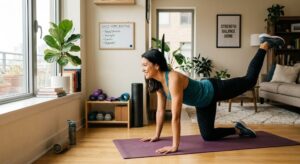
Your body provides all the natural resistance needed to stimulate muscle growth and preserve healthy bone density. Dedicate a small space in your home to perform foundational compound movements like standard push-ups, deep bodyweight squats, walking lunges, and static forearm planks to develop total-body functional power.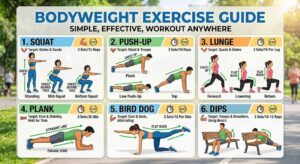
Carving out an intentional, stress-free morning window ensures that you get your blood circulating and your metabolic rate elevated before the chaotic demands of the day take over. To discover how to craft a peaceful morning framework that perfectly balances your nervous system and incorporates healthy movement smoothly, review our full roadmap on establishing the best morning routine for a healthy life to secure your fitness goals.
Climbing stairs is an exceptional vertical cardiovascular exercise that instantly triggers your lower body muscles, specifically targeting your glutes, hamstrings, and calves. Making a conscious choice to skip the elevator at work or inside apartment buildings raises your heart rate quickly and increases daily lower-body endurance.
No amount of physical exercise can completely reverse the negative impacts of an unmanaged, highly processed diet. Fuel your daily home movements by eating clean, whole foods including fresh vegetables, fibrous fruits, unrefined complex grains, and clean lean proteins to provide your muscle fibers with the structural blocks they need to recover.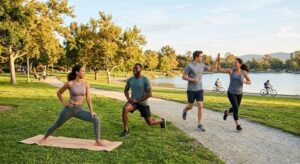
Chronic sitting can leave your hip flexors, hamstrings, and chest muscles dangerously tight and shortened, which alters your posture over time. Spend a few minutes every morning or evening performing gentle static and dynamic stretches to restore optimal tissue elasticity and maintain joint health.
Do not underestimate the physical value of non-exercise activity thermogenesis. Engaging in vigorous household cleaning, washing your own car, vacuuming your living spaces, or tending to an outdoor garden all keep your body moving, which burns extra energy and prevents metabolic stagnation.
The physical repairs and muscle-building adaptations triggered by your home exercises do not actually happen while you are moving; they take place while you are deeply asleep. Prioritizing consistent, high-quality rest balances your hunger hormones and gives your central nervous system time to recover.
Dancing is an incredibly fun, highly dynamic cardiovascular workout that utilizes multiple muscle groups simultaneously while improving your coordination and spatial balance. Simply playing your favorite high-energy music and moving continuously for twenty minutes can give you an excellent aerobic session.
When exercising at home, the absence of a paid gym fee means your personal discipline must be your primary driver. Performing short, focused fifteen-minute workouts every single day is vastly more effective for your long-term metabolic health than doing one long, exhausting workout every few weeks.
You can easily perform this balanced, full-body circuit anywhere without any special workout gear.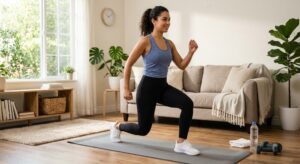
The Equipment-Free Reality Check: While fitness infomercials try to sell complex workout tools and fancy home gym gear, your body weight is the original resistance machine. Consistency, correct exercise form, and nutritional tracking will always matter far more than any paid equipment.
Myth 1: You Cannot Build True Lean Muscle Definition Without Heavy Iron Weights:
False. Your muscle fibers adapt directly to mechanical tension. By utilizing bodyweight exercises, manipulating your movement speed, and increasing total repetitions, you can stimulate meaningful muscle tone and conditioning.
Myth 2: Short Home Workouts Are a Waste of Time Compared to Long Gym Sessions:
False. Short, high-intensity home circuits or a quick twenty-minute brisk walk deliver significant improvements in insulin sensitivity, cardiovascular health, and daily energy management.
Myth 3: You Must Sweat Heavily for a Workout to Be Considered Successful:
False. Sweating is simply your body’s natural way of regulating its internal temperature. A great mobility routine, slow strength training, or yoga session can improve your health immensely without leaving you completely soaked in sweat.
Q1: Is it really possible to get in great cardiovascular shape by just walking?
Yes. Regular brisk walking is an incredibly effective form of steady-state cardio that strengthens your heart, improves metabolic conditioning, and helps manage weight safely.
Q2: How many times a week should a beginner perform a home workout circuit?
Beginners should aim for three to four short sessions per week, allowing a rest day between circuits to give muscle tissues ample time to repair.
Q3: What can I use at home if I want to add a little extra weight to my exercises?
You can easily use common household items like filled water bottles, a backpack stuffed with heavy books, or large clean jugs to introduce a touch of extra resistance safely.
Q4: Can home workouts help me naturally improve my body metabolism over time?
Yes. Combining consistent full-body bodyweight movements with healthy, balanced protein intake is a highly effective way to naturally optimize your metabolism.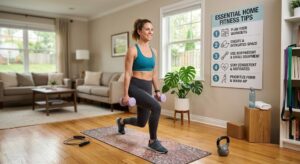
Staying fit without a gym is an incredibly liberating, highly practical journey centered around using your daily environment to support your long-term health. Physical vitality can never be locked behind a gym membership or bought from a fitness store; it is built through the small, disciplined choices you make every single day. By keeping your system properly hydrated, fueling your muscles with whole foods, prioritizing deep sleep, and committing to simple home workouts, you give your body everything it needs to stay strong and energetic. Be patient with your progress, enjoy the convenience of your home routine, and let your body develop its natural fitness.
The home workouts, bodyweight guidelines, and nutritional strategies detailed throughout this article are meant solely for educational and informational purposes. This content should never be used as a direct replacement for professional clinical medical advice, independent physical therapy evaluation, or specialized fitness prescription. Always consult directly with your primary care physician or a certified health professional before starting any new home workout regimen, particularly if you are recovering from joint injuries, manage underlying cardiovascular conditions, or are returning to physical exercise after a long period of inactivity.