
Yoga is one of the oldest, most reliable, and highly effective historical practices for significantly improving your physical, mental, and emotional well-being. Originating thousands of years ago, the holistic practice of yoga perfectly combines targeted physical postures, deeply controlled breathing techniques, and structured mindfulness to help create a deeply balanced and healthy daily lifestyle. Today, millions of health-conscious individuals all around the world actively practice yoga to safely improve their flexibility, reduce chronic stress, increase muscular strength, and enhance overall body performance naturally.
One of the greatest biological advantages of yoga is that it is fully suitable for individuals of all ages, body types, and baseline fitness levels. Beginners do not need expensive commercial gym equipment or advanced gymnastic skills to safely get started. Just a few dedicated minutes of daily practice can noticeably improve your posture, increase joint mobility, reduce localized muscle tension, and promote deep mental relaxation. Unlike taxing high-intensity workouts, yoga focuses entirely on gentle, controlled movements and deep breathing, making it an excellent choice for a low-impact form of daily exercise.
In this complete guide, you will learn the absolute best health benefits of yoga for beginners, discover simple yoga poses to safely start with at home, identify common beginner mistakes to avoid, and gain practical tips for building a highly consistent, life-changing yoga routine.
Yoga is much more than simple physical stretching; it is an integrated mind-body practice that unites physical movement with breathing and deep mental awareness.
Yoga Core Focus Area | Primary Biological Benefit | Key Beginner Poses | Target Wellness Goal |
Mobility & Flexibility | Releases stiff muscle groups & elongates tight fibers | Child’s Pose, Cat-Cow | Complete relief from chronic back and neck stiffness |
Functional Strength | Uses pure body weight to tone deep muscle layers | Plank Pose, Cobra Pose | Improved natural posture and joint stabilization |
Nervous System Calm | Lowers baseline cortisol levels & triggers relaxation | Corpse Pose (Savasana) | Deep relief from chronic daily stress and sleep issues |
One of the very first physical benefits beginners notice is a major improvement in total body flexibility. Regular stretching gradually lengthens tight hamstring, hip, and shoulder muscles, which increases your overall range of motion and makes everyday physical movements feel completely effortless.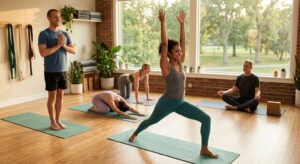
Yoga uses your own natural body weight to challenge and strengthen your structural muscles. Holding static poses forces your arms, legs, back, and core to work together, building a lean, functional strength baseline that supports your joints and keeps your bones safe.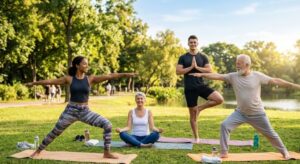
Many basic beginner poses actively challenge your balance and spatial coordination. Developing this inner stability triggers deep stabilizing muscles, which improves your everyday body control and naturally reduces the risk of accidental slips or falls as you age.
Yoga encourages rapid physical and mental relaxation by lowering your heart rate through controlled breathing. If you are noticing that everyday pressure is draining your energy and you want to look into targeted cellular recovery, our guide on the Best Vitamins for Energy and Fatigue Relief can help you address any underlying gaps.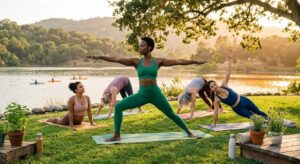
Spending long, uninterrupted hours sitting at an office desk creates weak core muscles and rounded shoulders. Yoga targets and strengthens your spinal muscles, which aligns your vertebrae naturally and eliminates nagging neck and upper back pain.
Practicing gentle yoga poses before turning in helps relax a racing mind and releases physical body tension. If you want to build a highly effective evening pattern to fix tossing and turning, pairing your movement with the habits in our guide on How to Sleep Better at Night Naturally is a great way to wake up feeling completely refreshed.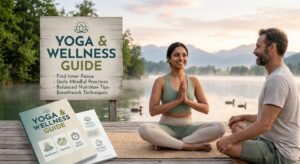
Even though yoga is deeply calming, the focused movements increase blood flow and deliver oxygen straight to your organs. This drop in physical fatigue leaves you feeling energized and alert after your session without any post-workout exhaustion.
Pranayama (breathing exercises) teaches you how to use your lungs fully instead of taking shallow chest breaths. This deep breathing increases your total oxygen intake, which calms your nervous system and helps you handle stress better.
Regularly stepping onto your yoga mat helps reduce systemic internal inflammation and supports healthy blood pressure levels. When combined with smart lifestyle choices, it lowers the workload on your cardiovascular system.
Yoga demands that you pay close attention to the present moment. This dedicated mental focus trains your brain to ignore outside distractions, which sharpens your daily memory, keeps your mind clear, and boosts your productivity.
While gentle yoga burns a moderate number of calories, its biggest benefit is how it builds mindfulness. By lowering stress, yoga helps cut down on stress-induced emotional eating, guiding you toward healthier, more intuitive food choices.
Sitting still for hours causes metabolic waste to pool in your muscle tissues, leading to painful knots. Gentle yoga stretches flush fresh, oxygen-rich blood through these tight areas, melting away physical tightness quickly.
Building a consistent wellness routine requires pacing yourself. For an excellent, well-balanced fitness plan, you can easily pair your gentle yoga sessions with the cardiovascular benefits of walking 30 minutes daily to keep your lungs, heart, and legs perfectly conditioned.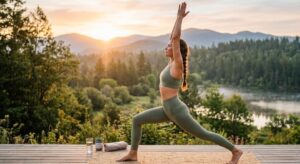
Q1: Do I need to be naturally flexible to start practicing yoga?
Absolutely not. You do not need to be flexible to start yoga; rather, you practice yoga specifically to become flexible over time.
Q2: What basic equipment do I need to practice yoga at home?
All you truly need is a basic, non-slip yoga mat and comfortable, stretchable clothing. Special props like blocks or straps are entirely optional.
Q3: Is it better to practice yoga in the morning or the evening?
Morning yoga is fantastic for waking up your muscles and boosting energy, while evening yoga is ideal for releasing work stress and preparing your body for deep sleep.
Q4: Can pregnant women or individuals with joint pain practice yoga?
Yes, but they should opt for specialized prenatal or restorative gentle yoga classes and should always clear it with their doctor first.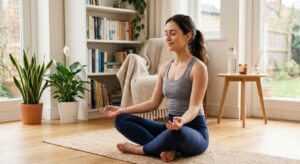
Embracing the benefits of yoga as a beginner is one of the most rewarding choices you can make for your lifelong health. It is not about forcing your body into complex, advanced shapes; it is simply about pairing mindful breathing with gentle movement to care for your body and mind. By starting with just ten to fifteen minutes a day, staying patient with your body’s natural limits, and practicing consistently, you will experience a wonderful increase in flexibility, a calmer mind, and lasting physical vitality.
The exercise, fitness, and nutritional insights shared throughout this article are meant strictly for educational and informational purposes. This content should never be used to replace professional medical advice, clinical diagnosis, or targeted physical therapy. Always consult with a primary physician or a certified healthcare specialist before starting any new physical fitness program, especially if you have pre-existing joint conditions, spinal issues, or underlying health concerns.