
Water is essential for every single biological function in the human body. From regulating vital body temperature to transporting crucial nutrients and safely flushing out metabolic waste, proper hydration plays a critical role in maintaining optimal everyday health. Despite its obvious importance, many people do not consume enough water throughout the day and may not realize they are becoming dangerously dehydrated until noticeable symptoms begin to appear.
Dehydration occurs whenever the body loses more total fluids and essential electrolytes than it takes in. This fluid deficit can happen due to excessive sweating, hot summer weather, viral illnesses, heavy physical activity, or simply forgetting to drink water regularly. Even mild dehydration can quickly drain your energy levels, damage your concentration, disrupt your mood, and lower your physical stamina. On the other hand, severe dehydration can transform into a serious medical emergency that requires immediate clinical care.
Recognizing the early warning signs of dehydration is incredibly important because taking prompt action can prevent serious internal complications and restore normal body functions. In this complete health guide, you will learn the most common symptoms of dehydration, key risk factors, everyday prevention strategies, and the most effective ways to stay properly hydrated.
Water supports nearly every major organ system in the human body. When your fluid balance drops by even a tiny percentage, your metabolic efficiency decreases.
Hydration Level | Urine Color Indicator | Associated Symptoms | Immediate Action Needed |
Optimal Hydration | Pale straw or light yellow | High energy, sharp focus, moist lips | Maintain current water intake patterns. |
Mild Dehydration | Dark yellow or amber | Increased thirst, dry mouth, mild headache | Drink 1-2 glasses of pure water immediately. |
Severe Dehydration | Very dark, brown, or no urine | Dizziness, rapid heart rate, confusion | Seek urgent professional medical care. |
Thirst is your body’s built-in alert system signaling that your blood volume is shrinking. However, waiting until you are completely parched is a mistake—thirst actually means your body is already mildly dehydrated.
When total fluids drop, your body cuts back on saliva production to save water for your internal organs. This creates a sticky, dry feeling in your mouth and causes your lips to crack.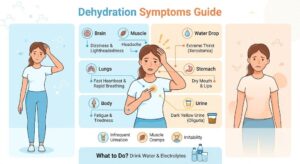
A lack of water causes your blood pressure to drop and your heart to work harder. If you are struggling with a lack of stamina and want to know how nutrients interact with your energy levels, check out our guide on the Best Vitamins for Energy and Fatigue Relief to clear up any underlying deficiencies.
When you lack water, your brain tissue can temporarily contract and pull away slightly from the skull, causing a dehydration headache. Regular fluid intake usually relieves this pressure quickly.
Lower blood volume means less oxygen reaches your brain, especially when you stand up suddenly. This can cause brief dizzy spells or feelings of faintness.
Hydrated skin snaps back into place immediately when pinched. Dehydrated skin loses this natural elasticity, feeling rough, dry, and looking dull.
Losing water through sweat causes you to lose vital minerals like sodium and potassium. This electrolyte imbalance makes your muscle fibers twitch and cramp painfully during movement.
Your brain is made of roughly 75% water. Even a tiny drop in hydration can impair your short-term memory, slow your thinking, and reduce your mental clarity.
With less fluid in your system, your total blood volume drops, forcing your heart to beat much faster to pump enough oxygen throughout your body.
Healthy kidneys filter waste efficiently when supplied with water. If your urine is consistently dark yellow or if you go hours without urinating, your body is desperately holding onto fluids.
Your specific fluid needs depend on your body weight, local climate, and daily activity levels. While standard rules are helpful, learning the exact parameters of how much water should you drink daily is essential to avoid both under-hydration and accidental over-hydration.
For active individuals who exercise or spend time outdoors, paired healthy habits are critical. Combining steady hydration with the physical benefits of walking 30 minutes daily after meals ensures your blood circulates perfectly and your digestion remains completely smooth.

Myth 1: You Must Drink Exactly 8 Glasses of Water Every Day:
False. Your personal fluid needs change based on your size, sweating rates, and diet. Relying on your urine color is a much more accurate test.
Myth 2: All Liquids (Like Soda or Sweet Juices) Hydrate You Equally:
False. While they contain water, highly sugary drinks can pull fluids out of your tissues and cause blood sugar spikes.
Myth 3: Coffee and Tea Completely Dehydrate You:
False. Moderate caffeine intake does have a mild diuretic effect, but the water present in your tea or coffee still contributes positively to your daily fluid goals.
Q1: What are the best hydrating foods to add to my meals?
Watermelon, cucumbers, strawberries, oranges, lettuce, and celery are packed with natural water and essential minerals.
Q2: Can dehydration cause sudden muscle weakness?
Yes. A lack of fluids disrupts the electrolyte balance required for normal muscle contractions, making your limbs feel heavy and weak.
Q3: Is coconut water better than plain water for hydration?
Plain water is ideal for normal days. However, coconut water is excellent after intense workouts because it is naturally rich in potassium and electrolytes.
Q4: Why do older adults get dehydrated more easily?
As the body ages, the natural sensation of thirst becomes less sharp, meaning older individuals often forget to drink water until they are already dehydrated.

Protecting your body from dehydration is one of the simplest yet most powerful choices you can make for your everyday health. By listening to early warning signs like mild thirst, dry lips, or low energy, you can easily fix a fluid imbalance before it harms your productivity. Keep a water bottle with you, eat plenty of water-rich fruits, and monitor your urine color throughout the day. Staying properly hydrated keeps your energy stable, your mind clear, and your body running smoothly.
The health, wellness, and hydration tips shared in this article are meant strictly for educational and informational purposes. This content should never replace professional medical advice, clinical diagnosis, or targeted treatment. Always consult with a primary physician or qualified healthcare provider if you experience chronic dizziness, severe vomiting, or persistent symptoms of extreme dehydration.